Girls love posing and taking pictures on their iPhones and guys like us love every minute of it. But there’s a difference between taking a selfie and taking a sexy self shot. Who cares about selfies of a girl ready to go out to dinner or doing their makeup? We want to see sexy self shots with girls in their underwear or next to nothing at all. If you’re here to see selfies, then try Instagram. But if you’re here to see sexy self shots, you’re in the right place.


10:


9:


8:


7:


6:


5:


4:


3:


2


1


SOURCE

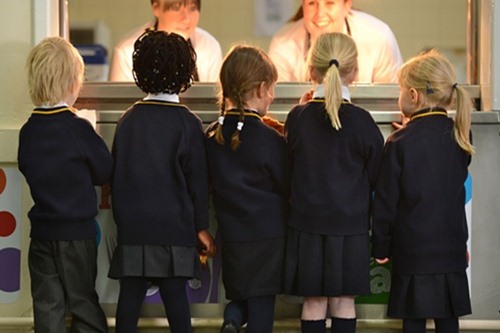
We often tend to think school ends when we graduate out of it and that its part of a formal training when we were kids. Truth be told, school never really end and apart from being a formal obligation, schooling is mandatory for a child’s development. Things that happens at school, things that we learn at school tends to remain with us a long time after it over. With no more delay, check out the 10 life lessons school taught you:

10. You Are a Part of a System

Whether it be the place you work or the country you live in, you are a part of a structured and orderly society. School could have seemed demanding in the sense that you were always required to dress a certain way, behave a certain way and respect an authority figure. But just as it is in school, countries have laws that citizens must obey and workplaces have bosses that may have you “called down to their office” at any given time of day. But luckily, school drilled it into you that no matter how unfair the system, you just have to smile and say, “Yes sir”.
9. No One Likes a Tattle-Tale

There was always that kid who would rat out the back-of-the-class gang for sneaking out of class, smoking during lunchtime or for any other seemingly normal teenage incident. But when the time came for the students to vote their peers into leadership positions, no one even thought twice about writing down the rat’s name. Just like that, co-workers would never opt to choose a project leader that would go running to the boss every time things didn’t go their way.
8. Pretty People Have It Easy

Remember that super pretty girl that set the bar for the rest of us? Or the George Clooney lookalike that all the guys despised but secretly wished to be? Yeah being compared to that unnaturally beautiful human being was rather unfair especially if your prime was any time except for high school. I have bad news for you; statistics show that good-looking people generally fair better at landing jobs as opposed to their less-pretty counterparts. Have a look for yourself here.
7. There Are Consequences to Not Meeting Deadlines

A rather obvious point but, nonetheless, it’s something most of us have learned as a result of school. Perhaps detention isn’t the worst that could happen; losing your job is. This is one of those very unlikely life lessons school taught you but its worth a hell lot. Once you start working you’d understand what we are saying here.
6. Embarrassing Uniforms Are Inevitable

For those of you who have never been forced to stick to a strict dress code have missed out on a valuable skill: how not to spit in your boss’s face when he shoves a yellow chicken costume into your arms. Of course, in reality, the worst that you had to wear was a terrible pleat skirt in school and, even so, it prepared you for the physical decency required at the workplace (which is not even that difficult to follow). Obviously if you end up wearing a chicken costume to work, your education must be lacking.
5. How to Sit Still Even Though You’re Dying to Scratch That Itch

One of those very unlikely lessons schools taught you. But yes, we’ve all been there. If you went to a strict military school like me, you will know the consequences that follow when you decide to whisper a comment to the person sitting next to you in the weekly assembly. Public humiliation would surely follow and perhaps six hours of detention as well. Okay, so maybe that’s a bit extreme. But when you’re in school, you have to sit still in class. Perhaps you will be grateful the next time it was your undisciplined co-worker and not you who got in trouble for not paying attention in a staff meeting.
4. Sometimes, You’ve Just Got to Be Strong

Believing in yourself to have the strength to deal with a situation is among those life lessons school taught you. When your boss doesn’t believe in your abilities, your co-workers don’t invite you to happy hour, or your spouse leaves you, just remember that you have been through this before. Your boss could be like that English teacher that could never see your point of view and your ex-spouse could be your first love that broke up with you when the time came for college. Sure, things are a hundred times worse now, but if you could do it then, you sure as hell can do it now.
3. Cliques Are Here To Stay

We’re sure this is not what you wanted to hear but this is, in fact one of the most useful life lessons school taught you. There’s the marketing crew who makes you think of those cool kids that you always wanted to be friends with back at school; there are the technical analysts who never quite out-grew their World of Warcraft personas; and there’s that strange guy in the cubicle next to yours who just won’t shut up about why we’re all damned to hell. Nothing new to see here folks!
2. Being Smart Isn’t Everything

Sure it could be to your advantage if you graduated top of your class and it feels good when everyone runs to you to solve a complex math equation, but the reality is that there is so much more to life. Success can be achieved in every shape and form. Those art junkies and football jocks could be excelling just as much as the valedictorian of your class.
1. High School Never Ends

Yup, that’s one of most significant life lessons school taught you. This list pretty much sums it up but in case you still don’t get it, here are the lyrics to the song by Bowling for Soup – “Four years you think for sure That’s all you’ve got to endure All the total dicks All the stuck up chicks So superficial, so immature Then when you graduate You take a look around and you say HEY WAIT ….. High school never ends. High school never ends. High school never ends. Here we go again.”
How many times have you seen posts on tech sites about “hidden iPhone features” and thought to yourself,these tricks aren’t really hidden at all. We’ve even had a few articles here on BGR with tips that were indeed unknown to most users, but the savvy iOS device owners out there were undoubtedly familiar with at least a few of them.

File Photo (AP Photo/Marcio Jose Sanchez)

Well, in this piece we’re going to tell you about 25 hidden features that are really, truly hidden. As in, you could look through your iPhone from now until the end of time and you wouldn’t find any of these tricks unless you know what you’re looking for.

In the past, many of the hidden tips we’ve seen on sites and even covered here are simply things that are buried in the Settings app in places people normally wouldn’t look. These are great things to know — plenty of people would make their camera flash blink with incoming messages if they knew that they could, for example — but they’re not really “hidden” or “secret,” per se.
Each of the tips that follow below, however, are completely hidden. There is no indication that these functions exist in iOS, and we guarantee that most users don’t know about them. In fact, we also guarantee that even the savviest iPhone owners among you will find at least one or two things you didn’t already know. In fact, ran this list past a friend who works at Apple and there were a few things that even he didn’t know.
Enjoy.
Redial: In the Phone app, press the green call button on the keypad screen to make the last dialed number appear.
Clear cache: Make your iPhone run faster by clearing out the cache in several of Apple’s apps using a secret trick. In the App Store, Podcasts, Music, Game Center, iMessage and Phone apps, tap on any single tab icon at the bottom of the screen 10 times in a row.
Make TouchID work faster: Save the same fingerprint multiple times as different entries and TouchID will work much faster. This is especially useful on older phones like the iPhone 6 and iPhone 5s.
Spotlight conversions: Remember when we told you how easy conversions are in our post on Google search tricks? It’s even easier for iPhone users — just open Spotlight and type something like “20 euros in GBP,” and it will instantly perform the conversion.
Spotlight math: Want to do a quick math problem? No need to open the Calculator app, just pull down to open Spotlight and type it right there.
Delete numbers in the Calculator: Speaking of the Calculator, you can delete single digits when you tap the wrong number by swiping left or right on the screen where the numbers appear.
Clear RAM to make your phone run faster: Hold down the power button until you see “Slide to power off,” then let go and hold down the home button until the screen goes blank and your home screen reappears.
Burst mode: Hold down the camera’s shutter button to shoot in burst mode.
Remote shutter: Use the volume up or down button on your headphones to snap a photo in the Camera app.
Turn the flashlight off: How many times have you turned your flashlight on and wished that you didn’t have to swipe open the Control Panel again to shut it off? We’ll save you a step: simply swipe up on the camera icon on your lock screen and the flashlight will turn off.
3D Touch while drawing: All of the drawing tools and the eraser are pressure sensitive in the Notes app.
Close multiple apps at once: Double-tap the home button to open the app switcher and you can use two, even three fingers to slide multiple apps closed with one swipe.
Recently closed tabs: Want to reread this article on your phone but you forgot what site you were reading it on in the first place? Simply tap and hold on the + symbol in Safari on the tab carousel view to open a screen that lists all of your recently closed tabs.
Desktop version of a site: We all know you can request the desktop version of a mobile site in Safari but it’s easier to do than you think. Just hold down the reload button in the URL bar.
Peek at tabs: Not sure you want to open that tab in the Safari tab carousel? A 3D Touch will let you Peek at it first.
Peek at bookmarks: Did you know you can use 3D Touch to Peek at bookmarks before you open them?
Edit reminders: 3D Touch an item in your Reminders app to edit the time or add a location.
View only unread emails: So you don’t practice “inbox zero” like I do but you only want to see unread emails in your inbox. Tap the Mailboxes link in the top right corner of the Mail app and then tap Edit. Tap the circle next to “Unread” and you’ll have a new folder that contains only your unread emails.
Save a draft with one swipe: In the Mail app, tap on the subject line and swipe down to the bottom of the screen to save a draft.
Quick Reply: When you get a notification at the top of the screen that you have a new iMessage or SMS, pull the notification downward to reply without leaving the screen you’re on.
Hidden level(s): Slide to the left in the Compass app open the level. Then place your phone flat with the screen facing away from the ground to reveal a bubble level.
Artist Peek: 3D Touch an artist in the Music app to Peek at their music.
Reenable Low Power Mode: When Low Power Mode automatically shuts off as you charge, you’ll get a notification on your lock screen that it has been disabled. Swipe left on that notification to turn it back on.
Find an iPhone’s owner: Did you find a lost iPhone in a bar? Simply ask Siri, “whose phone is this?” and it will show you so you can get in touch with him or her and return it.
Reachability: This is one of the new iPhones’ best features and there are still SO many people who don’t know about it. Double-touch (don’t tap, touch) on the home button and the entire screen will shift down so you can reach the top without shifting your grip.
There's nothing quite as frustrating as a weak Wi-Fi signal in your home or office. I live and work in a 1000-square-foot industrial loft that has a four-foot-thick dividing wall made of solid concrete and steel. It's great for noise insulation, not so great for wireless penetration -- so trust me when I say, I know what it's like to deal with a frustrating Wi-Fi deadzone.

(Image: Sarah Jacobsson Purewal)

My router is in my home office, which is attached to my bedroom. The unnecessarily thick concrete-and-steel wall separates my office from my living room, which is where my beautiful 40-inch HDTV, PlayStation 4, and Xbox One live. I have tried just about everything to improve my signal -- after all, a girl's gotta be able to stream Tokyo Jungle on PlayStation Now -- and there are only a few things that have worked. Here are some tips on how to improve the Wi-Fi strength in your home or office, from a desperate fan of the PlayStation Plus network:
Tweak Your Settings
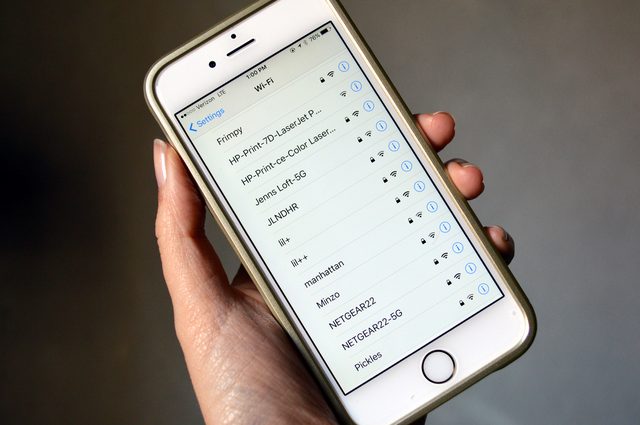
Most modern routers can run on two different frequencies: 2.4GHz, which is an older standard, and 5GHz. If you've never messed with your router's settings before, it's probably operating on the older 2.4GHz frequency. Because most routers run on this frequency by default, your Wi-Fi could be slower than it needs to be. If you live or work in an area that's crowded with Wi-Fi networks, you may be able to boost your Wi-Fi speed by switching your router's frequency and channel.
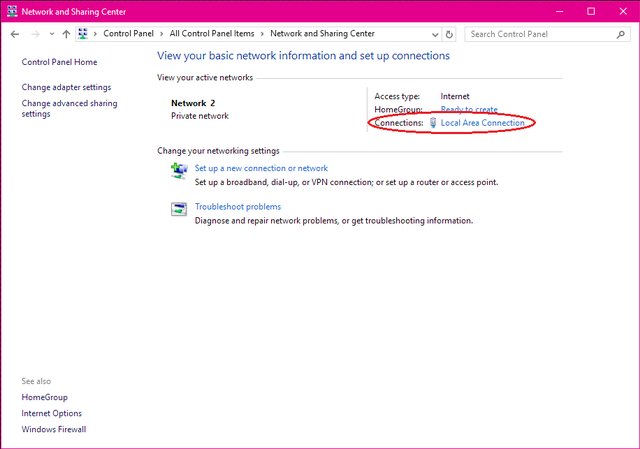
To change your router's frequency, you'll need to access your router's settings page. To do this, you will need to plug your router's IP address into the address bar of any browser. You can find your router's IP address by opening the Control Panel (in Windows 10, do this by right-clicking the Start button and choosing Control Panel) and going to Network and Sharing Center.

You do not need to be on a wireless connection to access your router's IP address,
 though you do need to be wired into your router. (Image: Sarah Jacobsson Purewal)

Next to Connections, click the name of your local network to open its properties window.
Click Details... to open the Network Connection Details, and find the number next to IPv4 Default Gateway. This is your router's IP address. Type this number into the URL bar of any web browser and hit the Enter key to open your router's settings page.

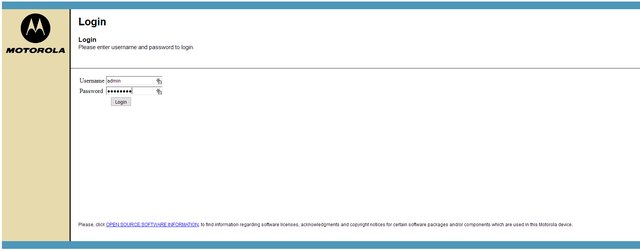
If you don't remember your username or password, try the default username and password for your router. 
(Image: Sarah Jacobsson Purewal)

You will need to log in to this page using your username and password. If you don't know your username and password, the router is probably using the default username and password. You can find your router's default username and password by selecting your model on this website.

(Image: Sarah Jacobsson Purewal)

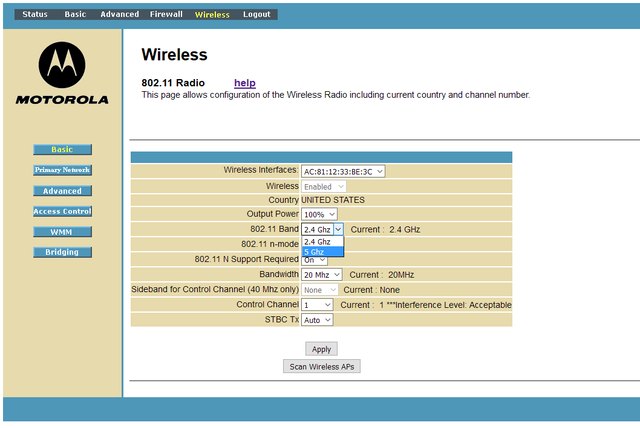
Once you're inside your router's settings page, look for the wireless settings. Here, you should see the option to change your 802.11 band from 2.4GHz to 5GHz.
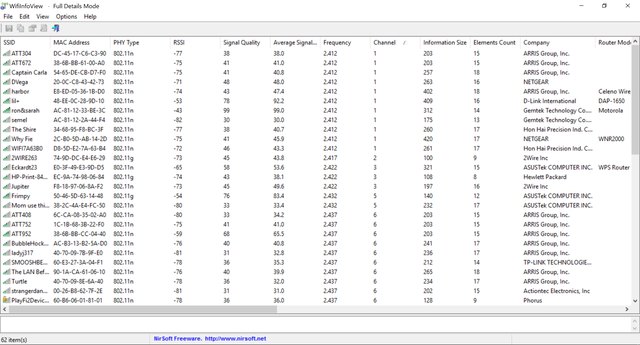
Changing your frequency is not the only thing you want to do, though -- you also want to make sure your router is operating on a control channel with as little traffic as possible. There are 11 channels on the 2.4GHz frequency, only three of which are non-overlapping (1, 6, and 11). There are 23 channels on the 5GHz frequency, all of which are non-overlapping. To find the channel that has the least traffic, you'll need to use a utility that can scan the networks in your area.

WifiInfoView shows you detailed information about the networks in your area. 
(Image: Sarah Jacobsson Purewal)

I like WifiInfoView, which is free. Simply download WifiInfoView, unzip the file, and run it, and you will be able to see all the networks in your area, what frequency they're using, and what channel they're on. Find the channel that has the least networks on it, and change your control channel to that one.
The frequency and channel you end up using will depend on the networks in your area and what you're looking to accomplish. The higher 5GHz frequency is not necessarily the best, it's just (often) the least used. However, it's important to note that while your signal may be stronger on the 5GHz frequency, it will not reach as far as it will on the 2.4GHz frequency. So if distance is your priority, you're better off sticking to the 2.4GHz frequency and one of the non-overlapping control channels with less traffic (usually 6 or 11).
Move Your Router
Your router's physical location is more important than you imagine when it comes to dispensing a strong, even signal. Ideally, your router will be positioned as close to the middle of your target coverage area. Realistically, the cable guy who installed your Internet probably hid your router away in a corner somewhere.
Well, good news: Routers are pretty portable! If you're having trouble getting a strong Wi-Fi signal in parts of your home or office, here are some things to consider as you move your router around:
  • Height: You want your router to be centrally located, both horizontally and vertically. If you're trying to cover multiple floors, your router should not be on the bottom floor. Even if you're only covering one floor, height can definitely help your router get better coverage -- consider placing it on a high shelf.
  • Surrounding material: Some building materials, including concrete, brick, and metal, will absorb and weaken your router's signal. If you can avoid placing your router near a lot of metal objects, or next to a four-foot-thick concrete-and-steel factory wall, that would be best.
  • Appliances: Microwaves operate on a frequency that is very close to the 2.4GHz band your router may be operating on. Thus, microwaves (and other household appliances, such as cordless phones and baby monitors) can disrupt your Wi-Fi signal -- yet another reason to switch over to the 5GHz band.
  • Antenna position: This one is easy -- you know how your router has an antenna? That antenna actually does something. If you need more vertical coverage, make sure the antenna is pointing up. If you need more horizontal coverage, make sure the antenna is pointing sideways.
Setup a Wireless Access Point
No amount of settings tweaks and re-positioning can help my unfortunate Wi-Fi situation -- that's what I get for living in a repurposed textile factory. Luckily, there's still another option for people in tricky Wi-Fi situations: Wireless access points.
Now, if your problem is that you simply need more signal -- you have a particularly large house, but no solid concrete walls -- you may not need to set up a wireless access point and you can simply make do with a Wi-Fi extender, like the Netgear EX6200, which is a dual-band extender. A Wi-Fi extender connects to your existing Wi-Fi network and repeats the signal to other parts of your home/office. The main issue with Wi-Fi extenders is the potential speed drop -- a dual-band extender can avoid this by running on a different frequency as your main router, but you'll still have a weaker signal from an extender than you will from the actual router.
For a Wi-Fi extender to work, however, you need to at least be able to get a Wi-Fi signal in the part of your home/office that you want to extend the signal to. I can't use a Wi-Fi extender in my situation, because my Wi-Fi signal drops off as soon as I cross the wall. Placing a Wi-Fi extender on the same side of the wall as my router would be pointless, because the Wi-Fi extender's signal can't cross the wall either.
So, for the truly desperate, this is what you'll need: A wireless access point and a very, very long Ethernet cable.

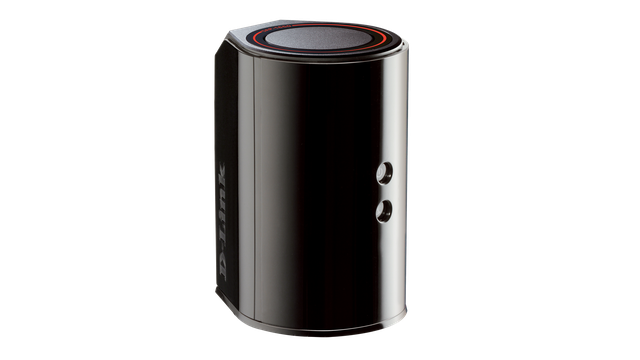
The D-Link DAP-1650 is a Wi-Fi extender that can also be set up as a wired wireless access point. 
(Image: D-Link)

I'm using the D-Link DAP-1650, which is a dual-band Wi-Fi range extender that can also be set up as a wired access point. To set up a wired access point, you will need to plug one end of your extra-long Ethernet cable into your router, and the other end into your wired access point. You can then place the access point wherever you want, but you will need to keep it connected to the router. In my case, that means running an Ethernet cable out of my office, through my hallway, and well into my living room. As difficult as this is to set up, the payout is worth it -- I now get a strong Wi-Fi signal on both sides of the wall.
Helpfularticlesforeveryone. Powered by Blogger.

Featured Video

Comments